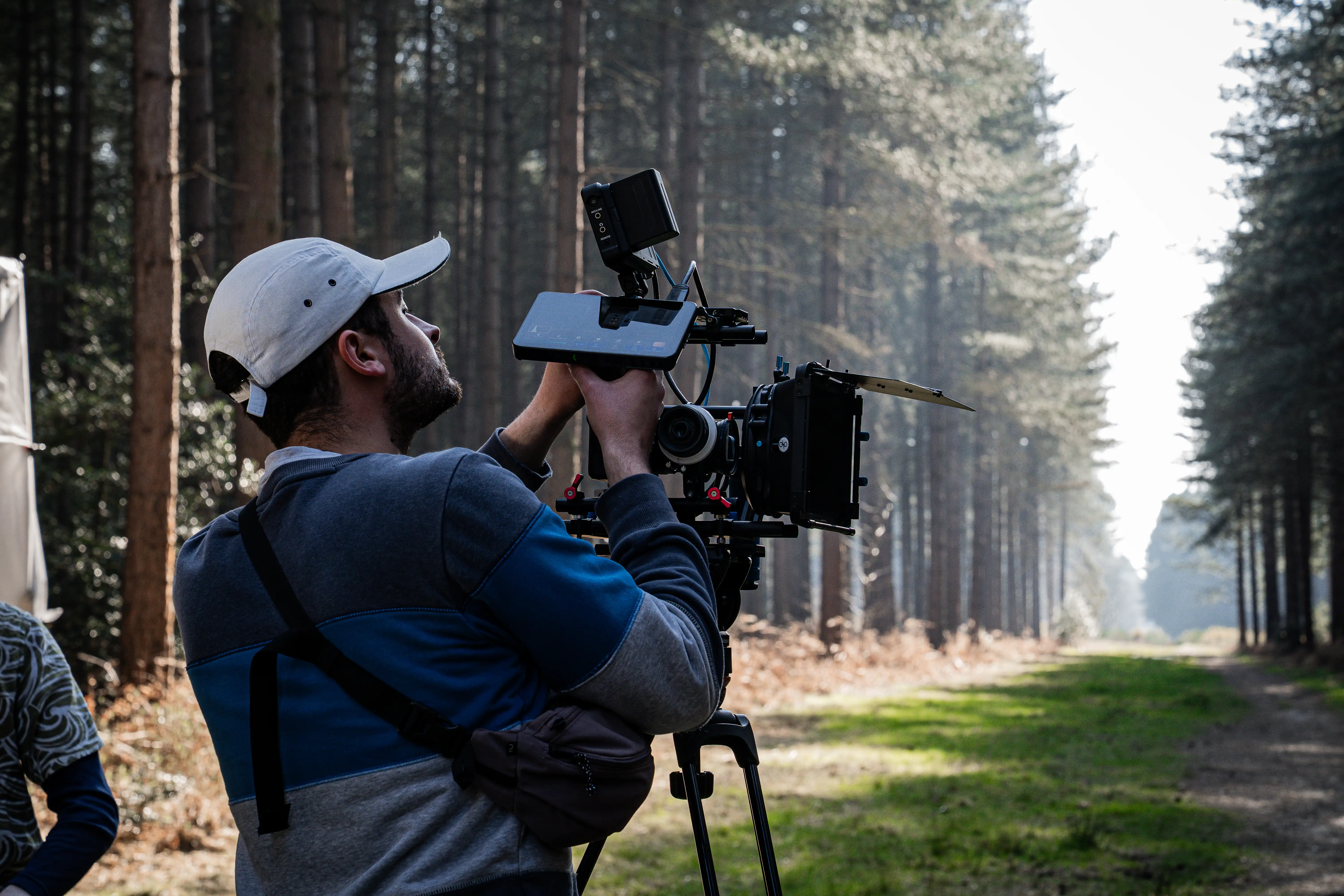
What Does a Professional Video Shoot Actually Look Like?
A straightforward look at what actually happens on a business video shoot, from the initial planning through to filming and delivery.
Video Production
Aug 7, 2026
Scroll down
If you've never had professional video made before, it's surprisingly difficult to picture what actually happens.
Do you need a script?
Do you need to know exactly what you want filmed?
Is someone going to turn up with an enormous crew and take over the business for the day?
Are you going to spend six hours awkwardly talking into a camera?
Usually, no.
Most business shoots are much more straightforward than people imagine.
It starts with working out what you're actually trying to show
Before anyone picks up a camera, there needs to be some idea of what the finished content is supposed to achieve.
That doesn't mean writing a 20-page creative brief.
Often it's a fairly simple conversation.
What does the business do?
Who are you trying to reach?
Where will the video actually be used?
What would someone need to see to get a proper feel for the business?
From there, you can start working backwards.
A gym might need to show the atmosphere of a class.
A restaurant might need food, service and the space itself.
A service business might benefit more from seeing the people behind it and hearing them explain what they do.
The answer is different every time.
You shouldn't need to plan the shots yourself
This is probably worth saying.
You don't need to turn up with a list saying:
“Close-up of coffee machine at 10:32.”
“Slow-motion shot of customer walking through door.”
“Drone shot facing north-west.”
That's our job.
You know the business.
The production team should know how to translate it visually.
Obviously, collaboration helps.
If there's something particularly important, say it.
But you shouldn't need to become a filmmaker for the project to work.
What actually happens on the day?
It depends on the business.
But usually, there's a mixture of things that have been planned and things that happen naturally.
We might capture:
the space
people working
customers interacting with the team
products being made
services being delivered
small details around the business
a few specific sequences we've planned beforehand
potentially interviews or pieces to camera
Some moments might be recreated so we can capture them properly.
Others are simply documented as they happen.
The aim is to build enough material that someone watching later can get a genuine sense of the business.
Do I have to be on camera?
Not necessarily.
This is probably one of the most common concerns.
Some videos benefit enormously from hearing directly from the people behind the business.
Others barely need it.
And even when someone is speaking, that doesn't mean standing in front of a camera and memorising a script.
We generally prefer conversations.
Ask someone a question.
Let them answer naturally.
Do it again if needed.
Take the strongest parts afterwards.
Most people are much better on camera when they stop trying to be “on camera.”
You don't need to close the business for the day
Again, this depends on the shoot.
But filming can often happen around normal activity.
In fact, sometimes that's better.
A completely empty café doesn't necessarily communicate what the café actually feels like.
Neither does a gym with nobody training.
Real activity gives you things that are difficult to manufacture.
Movement.
Interaction.
Atmosphere.
Little moments you couldn't have planned beforehand.
There might be certain shots that need some control, but the whole day doesn't need to become a film set.
Then most of the work happens afterwards
Once filming is finished, there's usually a lot more happening behind the scenes.
Going through the footage.
Choosing the strongest moments.
Building the edit.
Music.
Sound.
Colour.
Pacing.
Graphics, if they're needed.
Different versions for different platforms.
This is where a collection of individual shots starts becoming something that actually feels like the business.
One shoot can create more than one thing
This is worth thinking about before filming.
A shoot doesn't necessarily need to produce one video.
The same day might create:
a main website film
several shorter social pieces
photography
vertical clips
background footage for the website
content that can be reused later
That's why it's useful to know where everything will live before filming starts.
You can capture things differently when you know you'll need them in multiple formats.
It should actually feel fairly easy from your side
This is probably the main thing.
A professional production can involve a lot of work.
But most of that work shouldn't land on the client.
You shouldn't need to understand cameras.
Or editing.
Or lighting.
Or spend weeks figuring out exactly what needs filming.
You should mostly need to understand your own business.
Everything else can be worked out around that.
If the process feels surprisingly straightforward...
that's probably a good sign.